Designed for the assembly
Required thickness depends on the specified product, steel member, approved design and required fire-resistance rating—not a single standard coating thickness.
Protection for structural steel, joists and deck.
Calmar Corporation · Established 1944 · Serving Louisiana and the Gulf South.
See this service at Ampirical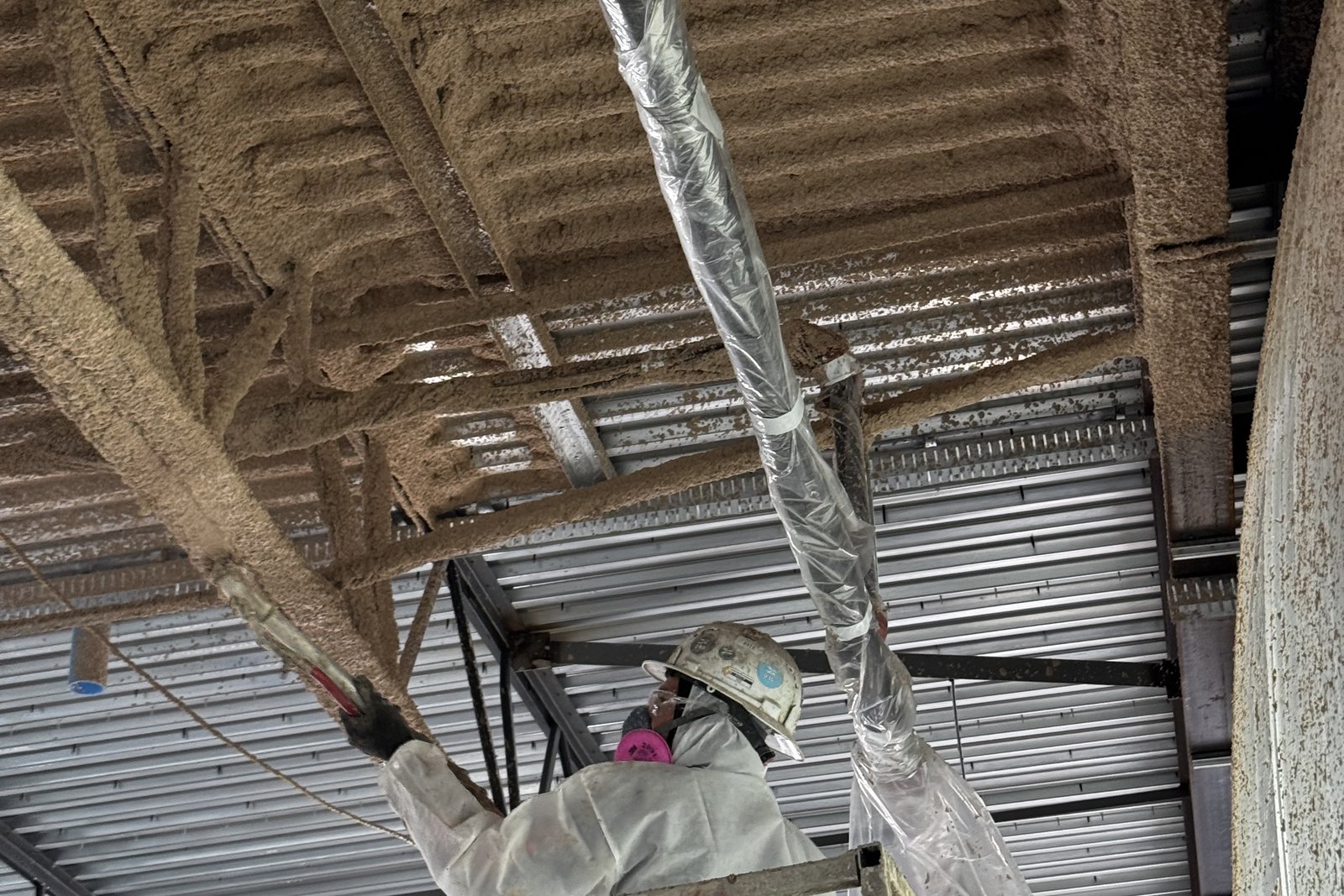
Cementitious fireproofing is a spray-applied fire-resistive material commonly used on structural steel, joists and deck. It is often selected where the steel will be concealed or a textured finish is suitable.
Calmar applies fireproofing to the specified product requirements and approved project design. Required assemblies, thicknesses and fire-resistance ratings come from the project documents and applicable listed designs. Typical products include Carboline Southwest (SW), GCP/Grace Monokote and Isolatek, as specified.
Required thickness depends on the specified product, steel member, approved design and required fire-resistance rating—not a single standard coating thickness.
Calmar provides submittal packages with product data and specified UL listings, coordinates application with other trades, and supports special inspections with inspection-ready documentation.
Spray-applied fireproofing comes in a few densities. The right one depends on where the steel lives — indoors or out, covered up or exposed, dry or damp — and how much wear it’s going to take. The listed design still sets the product and thickness on the job.
| Class | Typical density | Where it usually fits |
|---|---|---|
| Standard | About 15 pcf | Interior steel, often concealed in floors, roofs, beams, columns and joists |
| Medium | About 22 pcf, sometimes a 15–22 pcf range | Places that take more abuse or humidity, like elevator shafts, mechanical rooms and parking garages |
| High | About 40 pcf and up | High damage resistance, and some exterior or industrial work |
A simple way to think about density is exposure. Is the steel inside, outside but out of the rain, or fully in the weather?
Standard density is the usual choice when the steel will be covered up. If it’s exposed and might get bumped, or it sits in a humid room, medium or high density is a better fit.
Some spaces see weather without taking direct rain — a parking garage is a common example. Medium-density products made for that kind of indirect exposure are often used there, and in mechanical rooms and elevator shafts.
When the steel is fully out in the weather, you want a high-density product that’s made for exterior use. Not every high-density material is. The Southwest products we apply are for interior environments, so they aren’t the right choice for a fully weather-exposed application.
Typical densities and uses from manufacturer technical data sheets.
Ampirical Office Building in Covington, Louisiana, is a Calmar project with both cementitious and intumescent fireproofing. Its project page brings the two scopes together.
Send plans and specifications, including the required assemblies and fire-resistance requirements, for scope review.
No. Ratings depend on the approved assembly and specified system. Project photographs and general service descriptions are not substitutes for the project’s design requirements.
Send plans and specifications for a fireproofing scope review and proposal.
Send bid documents