K-13 Thermal & Acoustical Insulation
Acoustical and thermal insulation for exposed spaces.
Established 1944 · Licensed in Louisiana, Mississippi and Alabama.
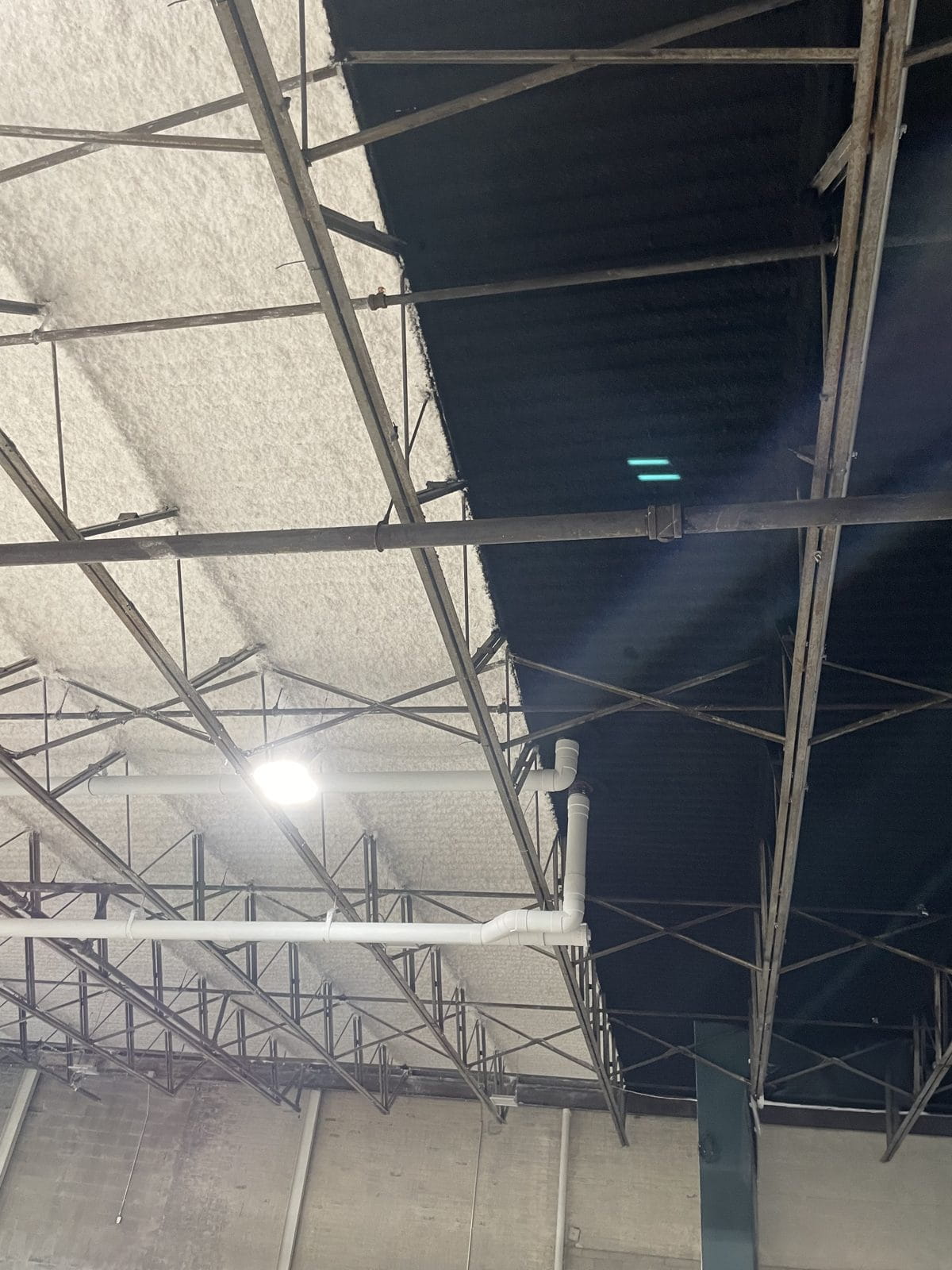
At The Exchange, Calmar applied K-13 to help soften the sharp pop of pickleball paddles echoing through the space.
The right material for the job
K-13 is a spray-applied cellulose insulation for exposed ceilings and walls. It can handle both thermal and sound control, and it isn’t a fireproofing system. Send the plans and specs, and we’ll review the scope.
Sound attenuation
K-13 soaks up sound instead of bouncing it back, so rooms feel quieter and less echoey. How much depends on the thickness and what it’s sprayed on. The chart below is International Cellulose’s published sound-absorption data, including the noise reduction coefficient (NRC) for each thickness.
On a phone, swipe the table sideways to see every frequency column and the NRC.
| Thickness | 125 Hz | 250 Hz | 500 Hz | 1,000 Hz | 2,000 Hz | 4,000 Hz | NRC |
|---|---|---|---|---|---|---|---|
| On solid backing | |||||||
| 1 in. | 0.11 | 0.32 | 0.84 | 0.99 | 1.01 | 0.98 | 0.80 |
| 1.5 in. | 0.21 | 0.46 | 1.06 | 1.13 | 1.02 | 1.00 | 0.90 |
| 1.75 in. | 0.30 | 0.74 | 1.14 | 1.06 | 0.99 | 0.98 | 1.00 |
| 2 in. | 0.47 | 0.90 | 1.06 | 1.06 | 1.08 | 1.07 | 1.00 |
| 3 in. | 0.57 | 0.99 | 1.04 | 1.03 | 1.00 | 0.98 | 1.00 |
| 4 in. | 0.84 | 1.06 | 1.01 | 1.03 | 1.00 | 0.98 | 1.05 |
| 5 in. | 0.99 | 0.89 | 1.05 | 1.03 | 1.00 | 1.00 | 1.00 |
| On 1.5 in. metal deck | |||||||
| 1.5 in. | 0.36 | 0.89 | 1.26 | 1.07 | 1.01 | 1.00 | 1.05 |
| 3 in. | 0.97 | 1.04 | 1.13 | 0.99 | 0.95 | 0.98 | 1.05 |
| On 2 in. metal deck | |||||||
| 1 in. | 0.39 | 0.63 | 0.96 | 0.99 | 1.04 | 1.06 | 0.90 |
| 2 in. | 0.55 | 0.99 | 1.13 | 1.06 | 1.05 | 1.10 | 1.05 |
| On 3 in. metal deck | |||||||
| 1 in. | 0.50 | 0.66 | 0.97 | 1.02 | 1.05 | 1.03 | 0.95 |
| 1.5 in. | 0.55 | 0.92 | 1.11 | 1.02 | 0.95 | 0.99 | 1.00 |
| 2.75 in. | 0.69 | 0.98 | 1.17 | 1.03 | 0.97 | 1.04 | 1.05 |
Environmental qualities and LEED
K-13 is a cellulose spray, made in Houston, with more than 80% pre-consumer recycled content. Leftover fibers can often be recovered and reused on the job. It’s a low-emitting product — International Cellulose lists it as UL GREENGUARD Gold — and it isn’t made with lead or other heavy metals, or with glass, mineral, asbestos, silica or synthetic fibers.
On a LEED project, that recycled content, the Houston manufacturing, low emissions, acoustics and light reflectance can all play a part. K-13 White, for example, has a light reflectance of 84+. International Cellulose is a charter member of the U.S. Green Building Council and publishes how K-13 fits LEED v4. Every project is a little different, so the design team still confirms the credits.
Sound figures and environmental information from International Cellulose’s published K-13 data.
Explore Calmar’s work.
Questions before a proposal
Does K-13 guarantee an acoustical rating for a room?
No. Room acoustics depend on the complete space and design. Product test data, application thickness and the project’s acoustical requirements must be reviewed together.
What should I send for a proposal?
Send project plans and specifications, including the required insulation system and performance requirements.
Start with the right scope.
Send plans and specifications for a fireproofing or insulation scope review and proposal.
Send bid documents